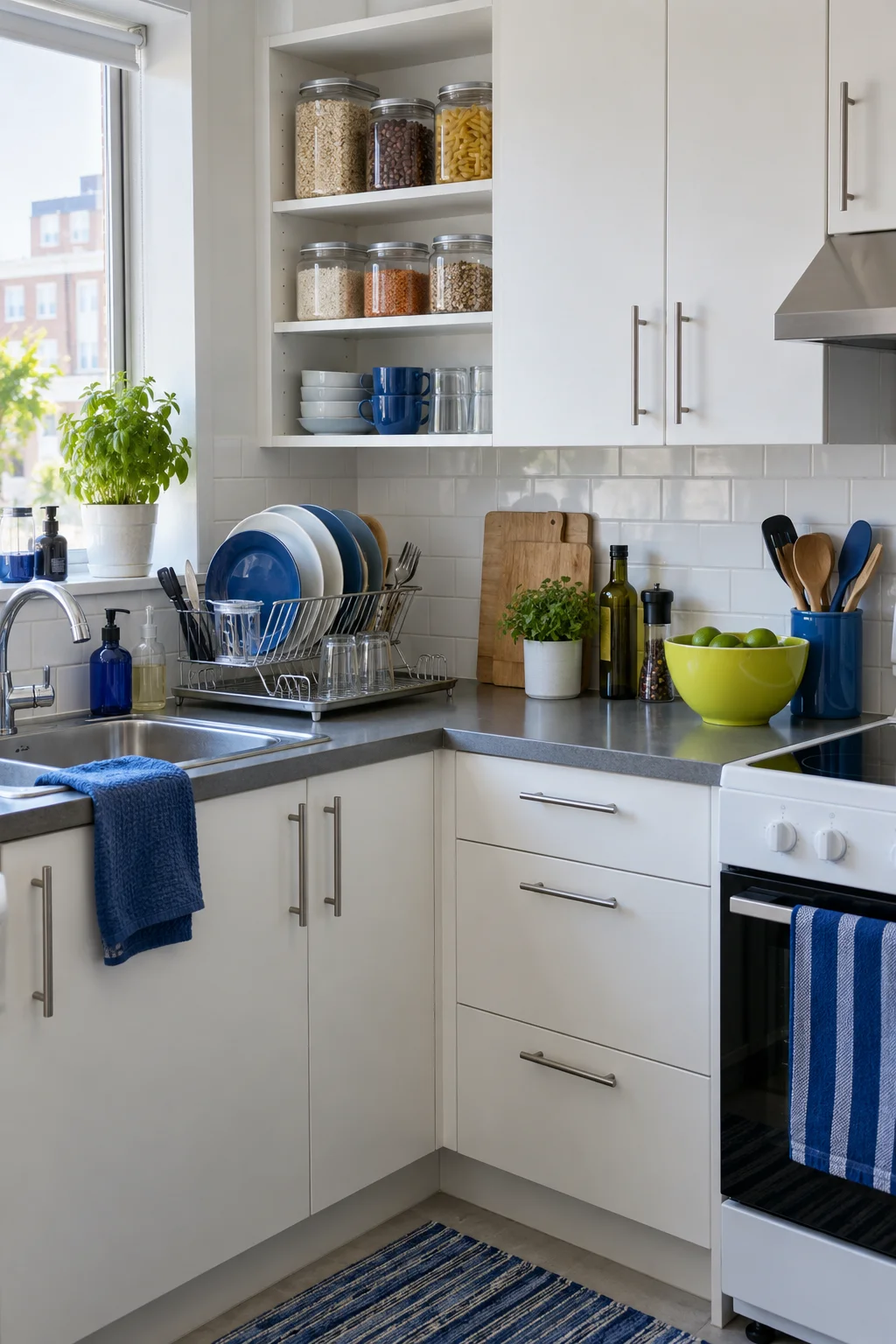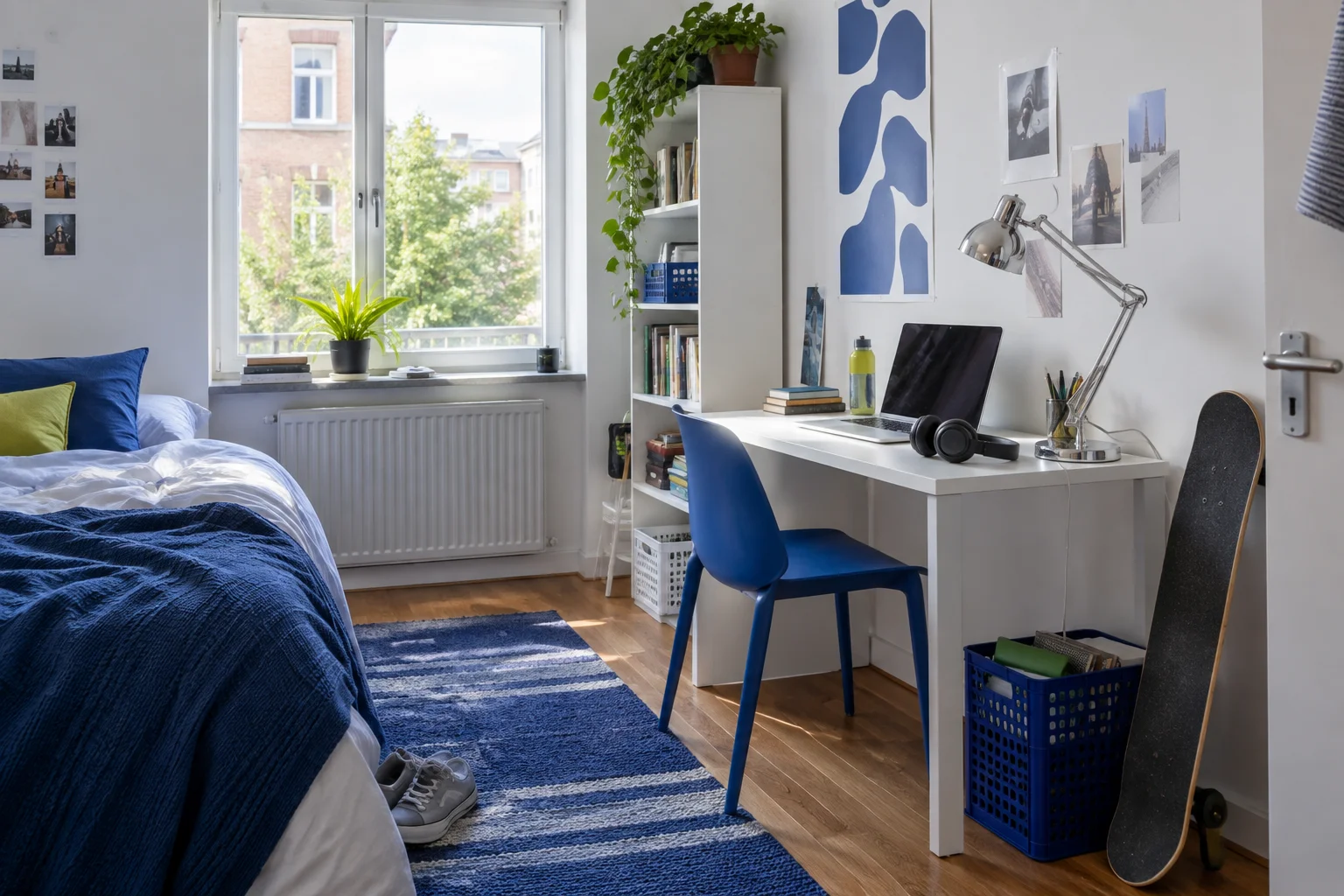
AI-created lifestyle inspiration. This is not a photograph of a recommended product.
A shared rental or first apartment can feel crowded even when every cupboard is full of useful things. The challenge is finding storage that fits the way you live without filling the remaining floor space. Before adding furniture, map the routes between your entry, kitchen, seating and sleeping areas.
Keep doors, exits, ventilation and everyday movement clear. Then look for the category of belongings causing the most friction. These eight ideas can help you think through a solution, but there is no need to use all of them. Begin with a single area you can measure and test.
1. Create a compact entry landing spot
Keys, bags and incoming mail need a predictable home. A small tray on an existing surface may be sufficient. If you are considering a narrow console, mark its footprint on the floor first and check the door swing with the furniture in mind.
Keep the landing spot selective. Moving unrelated items into a decorative basket by the door simply relocates the mess. Give mail a regular review so the entry does not become a permanent paper archive.
2. Use furniture with accessible storage
A storage ottoman or coffee table can hold items used in the living area. Think about how you will open it when the room is in use. If accessing a blanket requires moving drinks, books and a heavy lid, the storage may be less useful than it appears.
Check dimensions, stability and manufacturer instructions. Keep the contents relevant to the location rather than treating the cavity as a place for things you cannot categorise.
3. Make shelves work harder
Adjustable shelves can reduce unused height where the furniture permits changes. Store heavier items lower and follow the furniture manufacturer's installation and anchoring instructions. Tall furniture needs appropriate attention to stability, including in homes without children.
In a rental, confirm the rules and permission for fixing or anchoring before buying. A claim that furniture is slim or space-saving does not tell you whether it suits your walls, floor or household.
4. Organise inside cupboard doors carefully
An over-door organiser may use otherwise empty space, but it can interfere with hinges or stop the door closing. Check the door thickness, internal clearances and the weight of the intended contents. Test movement before loading it fully.
Avoid hanging storage where it could obstruct exits or essential access. Removable fittings are not automatically safe for every surface or lease arrangement; check both the product instructions and your circumstances.
5. Reserve under-bed storage for occasional items
Seasonal bedding or clean spare linen may suit this location better than things you need every morning. Measure the frame opening, handle height and access from the side. Consider whether you must move another piece of furniture each time you retrieve the container.
Keep textiles dry and inspect the area periodically. If moisture is an issue, deal with that before enclosing belongings. More containers do not solve a damp storage environment.
6. Use a portable task caddy
A caddy can help when the dining table is also a workspace or craft area. Group the items needed for one activity, then return the caddy to a cupboard afterwards. Try an existing basket first to learn the shape and capacity you need.
Avoid making it so heavy that clearing the table becomes difficult. Separate unrelated activities rather than creating one large container that needs sorting every time it is used.
7. Store suitcases with a plan
An empty suitcase may hold clean travel accessories or seasonal belongings, provided the location and materials are suitable. Label the contents so you do not have to open every case to find one item. Leave enough time to empty it when you need to travel.
Do not store damp items inside, and avoid turning luggage into a forgotten overflow cupboard. Review it at the change of season or before your next trip.
8. Share storage by function
In a shared apartment, agree where communal items belong and which spaces are personal. Broad labels can prevent duplicate purchases and make returning items easier. Allocate a manageable amount of shared shelf space to cleaning supplies, spare household items and tools.
A system everyone understands is more useful than elaborate organisation maintained by one person. Ask whether others can reach, lift and identify the containers before settling on an arrangement.
Buy after the trial
Measure the available space and the actual belongings, including room to open lids and drawers. Compare usable capacity, cleaning, assembly and the cost of delivery to your apartment. Start with the solution that makes one everyday routine easier; expansion can wait until you know it works.
A category to consider
Ottoman with internal storage
A furniture category that combines a room function with storage. Verify every model's stated use and capacity.
- Check before buying
- Full footprint, usable internal dimensions, lid mechanism, stability and assembly instructions.
- Potential advantage
- May keep living-room belongings close without adding a separate cabinet.
- Potential drawback
- Contents can be inconvenient to access when the top is in use; lids need clearance.
- May suit
- A living room with enough circulation space and a clear use for the furniture.
A few useful answers
Is taller storage always better?
No. Reach, stability, anchoring requirements and room proportions all matter. Follow furniture instructions and confirm permission for any required fixes.
How can housemates share a system?
Agree on broad categories and convenient shared locations. Make sure everyone can reach and understand the storage, then review it together after a trial.